11 Nov 2026
How Developer Partnerships Shape Innovation Cycles in Virtual Reel Gaming Industries

Developer partnerships have become central drivers in the virtual reel gaming sector, where companies combine resources to accelerate the creation of new game mechanics, platforms, and distribution methods. These collaborations often involve software studios, hardware providers, and platform operators working together on shared projects that introduce features such as adaptive algorithms, cross-device compatibility, and integrated reward systems. Data from industry reports indicate that joint ventures account for a growing share of new title releases each year, with partnerships enabling faster iteration cycles compared to solo development efforts.
Early Patterns in Collaborative Development
Observers note that partnerships in this space began expanding noticeably during the mid-2010s as mobile technology advanced and regulatory frameworks in multiple regions allowed broader digital distribution. Companies started pooling expertise in areas like random number generation and graphical rendering to meet rising demand for varied content. One case involved European and North American studios aligning on backend infrastructure projects, which reduced duplication of testing processes and shortened time to market for updated reel configurations.
Mechanics of Innovation Through Alliances
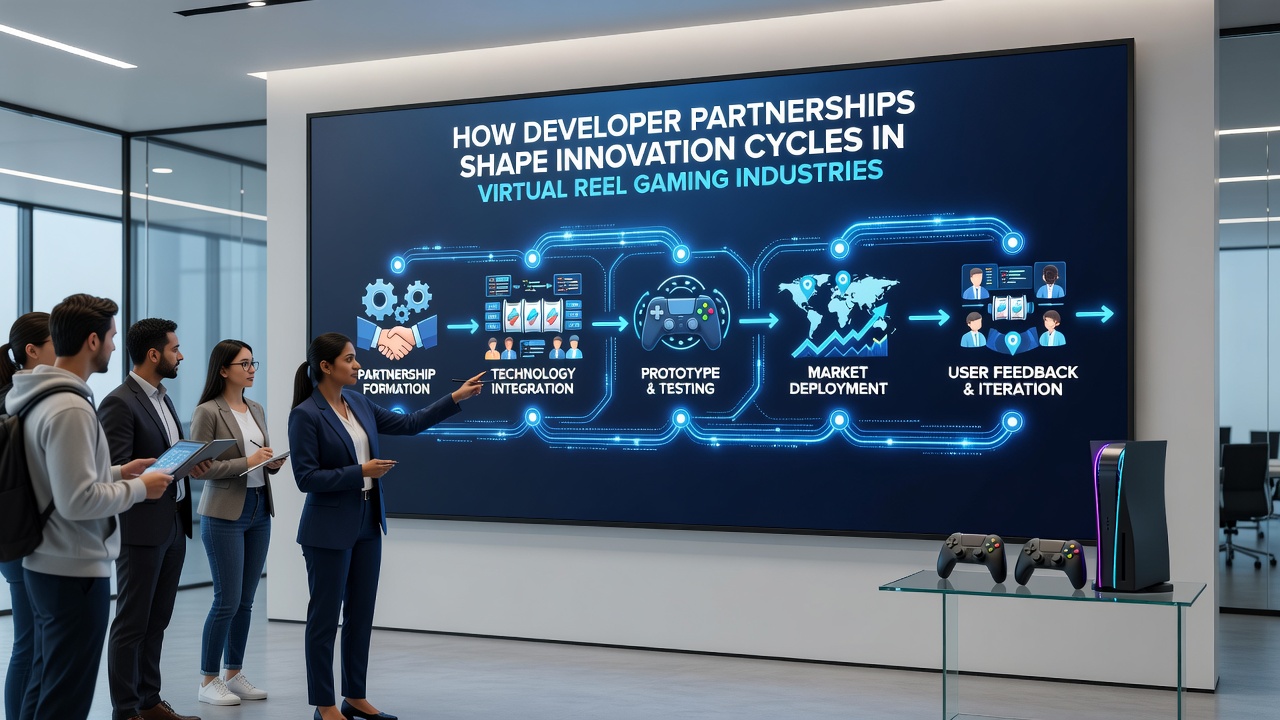
Partnerships typically follow structured phases that include joint planning sessions, shared intellectual property agreements, and phased rollout schedules. Researchers have documented how these arrangements allow access to specialized tools, such as advanced physics engines or cloud-based analytics platforms, that individual firms might not maintain independently. According to findings from the Canadian Gaming Association, collaborative projects have contributed to measurable increases in feature diversity within reel-based titles over successive release waves.
What's interesting is the way these alliances influence technology adoption rates. When one partner introduces machine learning components for session personalization, the other often integrates complementary elements like real-time leaderboard systems or progressive multiplier layers. This layering effect creates feedback loops where each new release builds on prior joint outputs, sustaining continuous refinement rather than isolated updates.
Regional Variations and Global Reach
European operators frequently partner with Asian technology firms to incorporate localized visual themes while maintaining core compliance standards. In contrast, partnerships crossing the Pacific often focus on scalability for high-volume markets, drawing on data centers and payment gateways suited to those environments. Figures from the European Gaming Institute reveal that such cross-border teams have supported the deployment of unified APIs that streamline updates across multiple jurisdictions simultaneously.
Effects on Release Cycles and Feature Evolution
Industry analysts track how partnered projects compress traditional development timelines from eighteen months down to nine or twelve in many instances. This acceleration stems from parallel workstreams where one team handles visual asset creation while another refines backend probability models. The result appears in clusters of related titles that share foundational code yet diverge in thematic presentation and bonus structures. Evidence suggests these patterns contribute to steadier content pipelines, helping operators maintain player engagement across seasonal periods.
November 2026 has been flagged in several project roadmaps as a target window for unveiling integrated systems that merge augmented reality overlays with existing reel frameworks. Partnerships announced earlier in the year are expected to deliver prototypes demonstrating synchronized multiplayer elements alongside traditional single-player modes, reflecting ongoing shifts toward hybrid experiences.
Challenges in Sustaining Long-Term Collaborations
While partnerships deliver clear efficiencies, they also introduce coordination requirements around data security, version control, and revenue sharing models. Those who have studied these arrangements point to the importance of clear milestone definitions and regular audits to prevent scope drift. Successful examples often involve neutral third-party oversight during integration testing, which helps maintain alignment between differing corporate cultures and technical priorities.
Conclusion
Developer partnerships continue to reshape how innovation unfolds in virtual reel gaming by distributing risk, combining specialized skills, and enabling iterative improvements at scale. Tracking these dynamics through 2026 and beyond shows consistent patterns of accelerated feature introduction tied directly to the depth and structure of collaborative agreements across the sector.